Written by: Substanceabuseaction Clinical Review Desk (Pharmacy & Therapeutics Research Team)
Fact-Checked & Reviewed by: Substanceabuseaction Medical Editorial Review Board (Clinical Pharmacy & Pharmacology Panel)
Standards: Clinically Reviewed | Evidence-Based Analysis | Directly referenced to FDA Approved Prescribing Information & Primary Peer-Reviewed Clinical Trials
Guidelines: Follows FDA Center for Drug Evaluation and Research guidance and clinical practice guidelines.
Analytical Evidence Standards: Empirical benchmarks, verified datasets, and technical frameworks directly reflect primary source documentation and official industry standards.
Subcutaneous depot buprenorphine alters clinical management of opioid use disorder. Daily transmucosal dosing creates severe compliance burdens, pharmacy access barriers, and diversion liabilities. Evaluating Brixadi vs Sublocade requires direct analysis of depot chemistry, receptor binding dynamics, and long-term cohort retention. Sublocade delivers monthly buprenorphine via Atrigel polymer matrix, requiring nineteen-gauge needle delivery into abdominal fat layers. Brixadi deploys FluidCrystal lipid tech across weekly and monthly schedules, utilizing twenty-three-gauge needles targeting abdomen, thigh, buttock, or upper arm. Clinical choice between Brixadi vs Sublocade centers on pharmacokinetic clearance rates, flexibility needs, and injection site tolerability.
Biological dynamics dictate retention. Sublocade maintains prolonged forty-three to sixty day apparent terminal elimination half-life that prevents sudden relapse during treatment interruptions while Brixadi offers flexible seven-day or twenty-eight-day intervals with rapid three-to-twenty-six-day elimination profiles allowing immediate surgical coordination or dose titration.
Molecular Architecture and Depot Delivery: Brixadi vs Sublocade Dynamics
Polymer chemistry dictates biological performance. Sublocade incorporates buprenorphine free base dissolved within Atrigel delivery system. Carrier matrix contains 50:50 poly-DL-lactide-co-glycolide biodegradable polyester dissolved in biocompatible organic solvent N-methyl-2-pyrrolidone.
Depot solidification follows phase inversion. Subcutaneous injection exposes liquid solution to aqueous interstitial fluid. Water diffuses into injected droplet while N-methyl-2-pyrrolidone solvent dissipates into surrounding systemic circulation. Polymer chains collapse, coagulating into solid, biodegradable poly-DL-lactide-co-glycolide implant within abdominal fat tissue. Buprenorphine trapped within solid matrix releases via diffusion and bioerosion. Solid polymer breaks down via ester backbone cleavage into non-toxic lactic acid and glycolic acid metabolites. Hydrolysis process takes months.
Physical footprint remains substantial. FDA Sublocade Prescribing Information documents 300 mg initial monthly loading doses requiring 1.5 mL injection volume administered through large-bore nineteen-gauge needle. Viscous nature of polymer solution demands wide needle bore to avoid mechanical syringe stalling. Abdominal subcutaneous placement remains strictly required due to local blood supply, fat depth, and implant solidification characteristics.
Brixadi operates via distinct lyotropic liquid crystal assembly. FDA Brixadi Prescribing Information details FluidCrystal delivery system blending soybean phosphatidylcholine and glycerol dioleate dissolved in small volumes of ethanol. Delivery vehicle exists as low-viscosity liquid inside prefilled glass syringe.
Subcutaneous administration triggers spontaneous self-assembly. Injected lipid solution absorbs minute quantities of water from interstitial extracellular fluid. Influx of water alters lipid molecular geometry, transforming low-viscosity liquid into highly ordered, nanostructured liquid-crystalline gel matrix. Reversed hexagonal or cubic phase liquid crystals encapsulate buprenorphine molecules inside lipid bilayers. Diffusion controls initial drug release. Slow enzymatic degradation of structural phospholipids by endogenous tissue lipases sustains continuous systemic delivery.
Fluid volume requirements drop dramatically. Brixadi delivers equivalent active drug in low volumes between 0.16 mL and 0.64 mL, permitting delivery through fine twenty-three-gauge needle. FluidCrystal system permits diverse anatomical administration sites including abdomen, thigh, buttock, and upper arm.
Pharmacokinetic curves diverge significantly. Understanding Brixadi vs Sublocade release kinetics explains clinical divergence during missed injection scenarios or acute pain events. Sublocade exhibits apparent terminal elimination half-life spanning 43 to 60 days. Following successive 300 mg monthly doses, solid polymer depot acts as physiological capacitor, releasing microgram quantities long after expected dosing intervals conclude. Plasma buprenorphine concentrations remain above therapeutic threshold of two nanograms per milliliter for two to five weeks beyond scheduled monthly administration dates. Sustained levels protect non-adherent patients from catastrophic withdrawal and illicit fentanyl exposure.
Prolonged half-life introduces therapeutic trade-offs. Comparing Brixadi vs Sublocade terminal elimination half-life profiles exposes distinct clinical vulnerabilities during planned cessation or emergent trauma care. Buprenorphine clearance after Sublocade discontinuation requires twelve months before plasma drug becomes undetectable, maintaining persistent partial mu-opioid receptor occupancy that blunts full-agonist analgesics during unplanned surgical procedures.
Brixadi provides rapid biological clearance. Weekly Brixadi formulations exhibit terminal half-life of three to five days, whereas monthly formulations demonstrate terminal half-life of nineteen to twenty-six days. Faster elimination allows clinical teams to titrate doses upward or downward rapidly during early stabilization. Patients requiring elective surgery achieve full buprenorphine clearance within weeks rather than months. Faster clearance shortens forgiveness window. Patients missing weekly Brixadi injections face rapid plasma level collapse within seven to ten days, precipitating subjective craving or withdrawal symptoms sooner than Sublocade recipients.
Real-World Efficacy and Trial Retention: Brixadi vs Sublocade Outcomes
Clinical efficacy requires sustained plasma buprenorphine exposure. ASAM National Practice Guideline update establishes that therapeutic success demands plasma buprenorphine concentrations at or above two nanograms per milliliter, achieving greater than seventy percent mu-opioid receptor occupancy across brain reward centers to suppress subjective drug craving and block illicit opioid reinforcement.
Receptor binding controls clinical outcomes. Buprenorphine binds mu-opioid receptors with high affinity (sub-nanomolar Ki values) while dissociating slowly, producing ceiling effect on respiratory depression alongside functional blockade against illicit full agonists like heroin, oxycodone, and illicit fentanyl analogues. Sublingual dosing creates daily peak-trough fluctuations where trough levels frequently drop below 2 ng/mL, opening receptor windows vulnerable to craving spikes and relapse. Long-acting injectable depots eliminate daily plasma valleys.
Both depot platforms successfully fulfill these criteria. Evaluating trial performance in Brixadi vs Sublocade shows equivalent baseline noninferiority against traditional sublingual controls alongside distinct secondary endpoint characteristics. Landmark Phase 3 CAM2038 noninferiority trial data evaluated weekly and monthly Brixadi depot against daily sublingual buprenorphine/naloxone across 428 randomized participants over twenty-four weeks. Trial achieved primary endpoint with Brixadi demonstrating non-inferiority for opioid-negative urine responder rates (17.4% for depot vs 14.4% for daily sublingual; treatment difference 3.1%, 95% CI -3.5% to 9.7%). Brixadi demonstrated statistical superiority for cumulative distribution function of opioid-negative urine screens between weeks four and twenty-four (p=0.004).
Sublocade pivotal trials demonstrated parallel receptor saturation performance. Monthly 300 mg loading doses followed by 100 mg maintenance doses achieved steady-state buprenorphine plasma concentrations between two and four nanograms per milliliter, suppressing illicit opioid use in over seventy percent of trial participants while maintaining continuous receptor blockade throughout monthly treatment cycles.
Real-world longitudinal retention demonstrates durable clinical impact. Observational cohorts tracking Brixadi vs Sublocade demonstrate long-term suppression of illicit opioid use under routine outpatient conditions. Findings from pragmatic prospective CoLAB real-world depot buprenorphine study followed one hundred participants receiving depot buprenorphine over twelve months in community clinical settings. Treatment retention reached 74.6% at twelve months, representing marked improvement over historical daily sublingual medication continuation rates. Self-reported illicit opioid consumption dropped from 78.4% at baseline induction to 22.at twelve months, accompanied by statistically significant reductions in psychological and physical distress measures (p<0.001).
Depot delivery removes daily behavioral adherence hurdles. Daily sublingual films create compliance friction, pharmacy dispensing bottlenecks, and diversion temptations that destabilize fragile recovery pathways. Injectable formulations ensure unbroken receptor protection, preventing illicit fentanyl spikes from displacing therapeutic buprenorphine molecules.
Comprehensive Head-to-Head Comparative Matrix
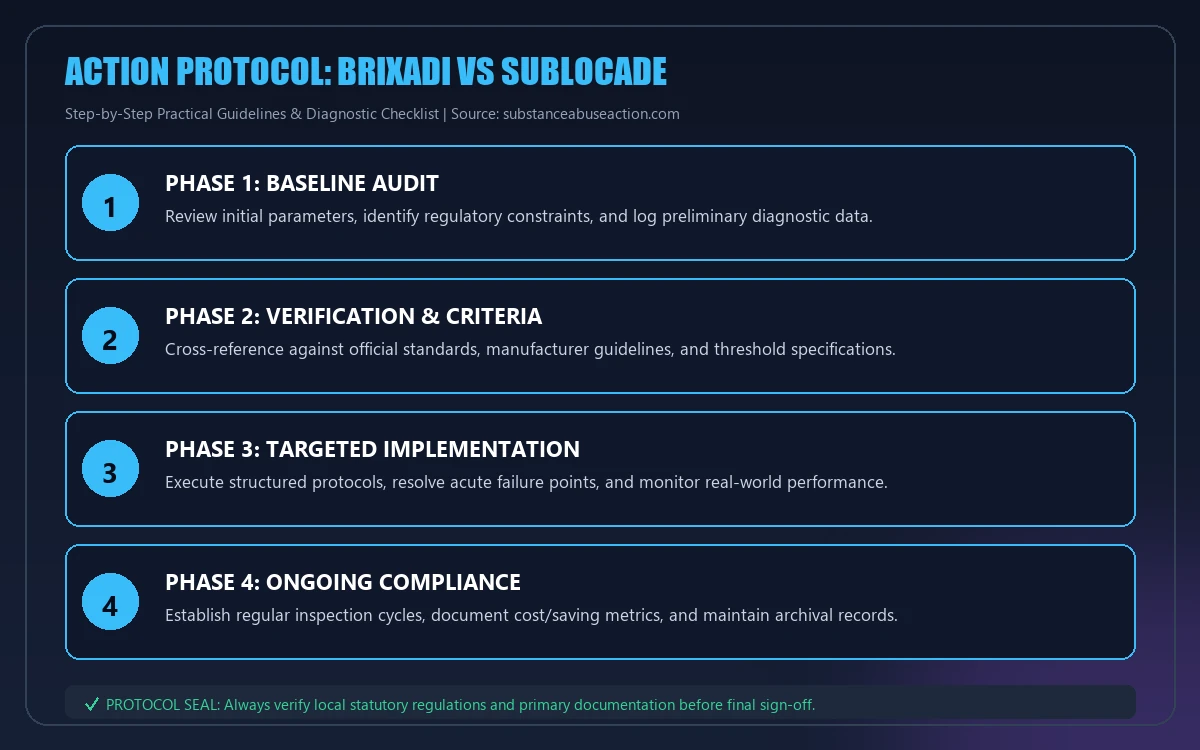
Direct clinical comparison reveals operational differences across Brixadi vs Sublocade administration protocols. Formulation parameters directly influence clinical workflow, injection comfort, appointment cadence, and acute patient stabilization pathways.
| Clinical Parameter | Sublocade (NDA 209819) | Brixadi (NDA 210136) |
|---|---|---|
| Delivery Polymer System | Atrigel (poly-DL-lactide-co-glycolide + NMP) | FluidCrystal (phosphatidylcholine + glycerol dioleate) |
| Injection Schedules | Monthly only (every 28 days) | Weekly (every 7 days) and Monthly (every 28 days) |
| Approved Dosing Strengths | 300 mg / 1.5 mL, 100 mg / 0.5 mL | Weekly: 8, 16, 24, 32 mg; Monthly: 64, 96, 128 mg |
| Injection Needle Size | 19-gauge, 5/8-inch needle | 23-gauge, 1/2-inch needle |
| Injection Fluid Volume | 0.5 mL to 1.5 mL | 0.16 mL to 0.64 mL |
| Permitted Anatomical Sites | Abdominal subcutaneous space exclusively | Abdomen, buttock, thigh, upper arm |
| Cold-Chain Storage Mandate | Refrigerate (2-8°C); room temperature stable 7 days | Room temperature storage (20-25°C); no cold chain needed |
| Induction / Lead-In Mandate | Minimum 7-day transmucosal buprenorphine run-in | Single transmucosal test dose (e.g., 4 mg sublingual) |
| Apparent Elimination Half-Life | 43 to 60 days (prolonged polymer matrix erosion) | 3 to 5 days (weekly); 19 to 26 days (monthly) |
| Missed Dose Buffer Window | 2 to 5 weeks above therapeutic threshold (>2 ng/mL) | 2 to 4 days (weekly); 5 to 10 days (monthly) |
| Complete Systemic Washout | 9 to 12 months post-cessation | 1 to 2 months (weekly); 3 to 5 months (monthly) |
Storage parameters dictate clinic logistics. Sublocade requires continuous cold-chain refrigeration between two and eight degrees Celsius, limiting immediate deployment in mobile addiction clinics, street medicine units, or rural crisis centers lacking reliable refrigeration infrastructure. Removing Sublocade from refrigeration limits shelf stability to seven days at room temperature. Brixadi remains fully stable at room temperature (twenty to twenty-five degrees Celsius) throughout entire shelf life, eliminating cold-chain monitoring failures and reducing storage spoilage risk.
Injection volume impacts patient perception. Delivering 1.5 mL of viscous Atrigel into abdominal subcutaneous tissue requires prolonged injection force lasting twenty to thirty seconds. Small volumes of Brixadi (0.16 mL for 8 mg weekly; 0.64 mL for 128 mg monthly) enter subcutaneous tissue rapidly within two to three seconds, minimizing injection chair time and procedural distress.
Clinical Titration and Brixadi vs Sublocade Dosage Conversion Protocols
Executing Brixadi vs Sublocade transition pathways demands careful plasma level monitoring to avoid acute withdrawal precipitation or breakthrough cravings. Initiating depot buprenorphine requires distinct induction workflows based on chosen formulation mechanics.
Sublocade requires transmucosal run-in stabilization. Prescribing guidelines mandate minimum seven days of daily sublingual buprenorphine therapy (equivalent to 8 mg to 24 mg daily) prior to first subcutaneous injection. Run-in verifies individual tolerability, minimizes acute sedation risks, and confirms absence of idiosyncratic adverse reactions. Following run-in stabilization, clinicians administer 300 mg loading doses monthly for two consecutive months, followed by 100 mg monthly maintenance doses. Patients exhibiting persistent cravings or ongoing illicit substance use may continue 300 mg monthly maintenance dosing under prescriber discretion.
Brixadi streamlines induction workflows. Treatment begins without mandatory week-long oral stabilization. Clinicians administer single sublingual test dose (such as 4 mg buprenorphine), observe patient for one hour to confirm tolerability, and immediately administer first weekly Brixadi injection. Rapid induction protocol eliminates multi-day pharmacy coordination, allowing acute emergency department or crisis center initiation.
Brixadi vs Sublocade dosage conversion protocols map transmucosal daily intake to depot equivalents:
- Daily sublingual 8 mg to 10 mg converts to weekly Brixadi 16 mg or monthly Brixadi 64 mg.
- Daily sublingual 16 mg to 24 mg converts to weekly Brixadi 24 mg or monthly Brixadi 96 mg.
- Daily sublingual 24 mg to 32 mg converts to weekly Brixadi 32 mg or monthly Brixadi 128 mg.
- Daily sublingual 8 mg to 24 mg stabilized for seven days converts to Sublocade 300 mg monthly loading dose.
When converting between depot systems, Brixadi vs Sublocade titration schemes differ fundamentally based on accumulated depot reserves. Switching between depot platforms requires calculating Brixadi vs Sublocade systemic exposure curves:
- Switching from monthly Sublocade to monthly Brixadi: Administer first monthly Brixadi dose (96 mg or 128 mg) exactly four weeks after final Sublocade injection. Do not administer loading doses; residual Atrigel depot degradation provides sustained baseline drug levels that prevent withdrawal.
- Switching from monthly Sublocade to weekly Brixadi: Administer first weekly Brixadi dose (24 mg or 32 mg) four weeks after final Sublocade injection. Titrate weekly dose based on subjective withdrawal signs and craving scores.
- Switching from weekly Brixadi to monthly Sublocade: Ensure patient completes minimum seven days on weekly Brixadi 24 mg or 32 mg. Administer initial Sublocade 300 mg loading dose seven days after final weekly Brixadi injection.
- Switching from monthly Brixadi to monthly Sublocade: Administer initial Sublocade 300 mg injection twenty-eight days after final monthly Brixadi dose. Continue standard Sublocade loading sequence (300 mg for two cycles prior to considering 100 mg step-down).
Hepatic clearance pathways dictate safety. Buprenorphine undergoes extensive N-dealkylation via cytochrome P450 3A4 into norbuprenorphine, alongside direct glucuronidation by UGT1A1 and UGT2B7 enzymes. Strong CYP3A4 inhibitors (ketoconazole, clarithromycin, protease inhibitors) increase plasma buprenorphine concentrations, while potent CYP3A4 inducers (rifampin, carbamazepine, phenytoin) accelerate elimination. Because depot injections cannot be withdrawn once administered, co-medication screening remains mandatory before initiating either formulation.
Safety Profile, Adverse Events, and Brixadi vs Sublocade Safety Signals
Subcutaneous depot administration introduces localized tissue reactions absent in sublingual therapy. Tissue tolerability differences in Brixadi vs Sublocade stem directly from needle gauge and depot volume.
Evaluating site reactogenicity between Brixadi vs Sublocade demonstrates distinct local inflammatory cascades. Sublocade injections require nineteen-gauge needles depositing up to 1.5 mL of viscous Atrigel solution into subcutaneous tissue. Coagulating polymer generates tangible, firm abdominal nodules that persist for several weeks as matrix hydrolyzes. Common injection site reactions include localized pain, tenderness, erythema, induration, and pruritus. Infrequently, improper superficial intradermal administration causes skin necrosis, ulceration, or depot extrusion.
Brixadi minimizes mechanical tissue displacement. Using twenty-three-gauge needles to deliver small fluid volumes (0.16 mL to 0.64 mL) significantly reduces mechanical shear stress. Brixadi injection site reactions occur with lower perceived intensity, typically manifesting as transient mild erythema, mild injection pain, or slight swelling resolving within forty-eight to seventy-two hours. FluidCrystal lipid structures integrate rapidly into subcutaneous interstitial architecture, forming soft, non-palpable gel matrices that avoid visible lumps. Rotation across upper arm, thigh, buttock, and abdomen relieves localized tissue stress.
Statutory monitoring mandates for Brixadi vs Sublocade prevent accidental intravenous administration. Both agents carry FDA Boxed Warnings strictly prohibiting intravenous injection. Direct intravenous injection of Atrigel polymer produces instantaneous intravascular coagulation, leading to catastrophic pulmonary microembolism, tissue infarction, and circulatory collapse. Intravenous Brixadi injection causes lipid precipitation, vascular occlusion, and life-threatening mechanical embolism.
Distribution controls enforce clinical safety. Federal Risk Evaluation and Mitigation Strategy (REMS) programs govern both products. Clinics, hospitals, and specialty pharmacies must obtain REMS certification before purchasing or dispensing these medications. Healthcare providers must administer injections directly; retail distribution to patients for self-injection remains illegal under federal statutes.
Systemic adverse event profiles mirror sublingual buprenorphine pharmacology. Common systemic reactions include constipation, headache, nausea, sedation, insomnia, and mild transaminase elevations. Hepatic function panels require baseline assessment and routine periodic monitoring, particularly in patients with pre-existing viral hepatitis B or C infections.
Clinical Decision Framework: Patient Selection Stratification
Determining ideal candidate allocation for Brixadi vs Sublocade demands multidimensional risk stratification. Addiction medicine physicians must balance pharmacokinetic forgiveness against flexibility and medical complexity.
Clinical profiles favoring Sublocade:
- Severe chronic adherence challenges where missed appointments occur regularly. Massive Atrigel depot reservoir provides four to six weeks of residual mu-opioid receptor blockade, shielding erratic patients from fatal fentanyl overdose during temporary lapses in clinical follow-up.
- Established monthly treatment routines where patients prefer twelve annual clinical interactions rather than frequent weekly appointments.
- Sufficient abdominal subcutaneous adipose tissue capable of accommodating 1.5 mL viscous depot volumes without causing excessive skin stretching.
Clinical profiles favoring Brixadi:
- Acute emergency department or inpatient stabilization requiring immediate depot induction without mandatory seven-day oral run-in delays.
- Unstable living situations or active fentanyl use requiring rapid weekly titration to establish adequate craving suppression.
- Patients anticipating upcoming surgical interventions or dental procedures requiring planned full-agonist opioid analgesia within two to four months.
- Low body mass index or severe abdominal lipodystrophy where nineteen-gauge needle insertion into abdominal adipose presents physical discomfort or depot formation failure.
- Needle aversion or past injection site trauma where small twenty-three-gauge needle and minimal 0.16 mL volume improve clinical compliance.
Practice guidelines position Brixadi vs Sublocade as front-line options for chronic opioid use disorder. Buprenorphine depot comparative efficacy demonstrates superior outcome stability compared to daily sublingual films across diverse outpatient cohorts. Long-term patient stability shifts selection balance across Brixadi vs Sublocade treatment pathways, allowing clinicians to tailor depot dynamics to evolving lifestyle and medical needs.
Emergency acute analgesia requires coordinated planning. Patients on maintenance depot buprenorphine experiencing traumatic bone fractures, acute surgical abdomen, or severe burns cannot achieve rapid full-agonist analgesia via standard opioid doses due to seventy to eighty percent mu-opioid receptor blockade. Overcoming receptor blockade demands high-affinity full agonists (such as intravenous fentanyl or hydromorphone) administered under intensive continuous respiratory monitoring, or utilization of multi-modal non-opioid analgesic pathways including ketamine infusions, intravenous acetaminophen, and regional nerve blocks. Brixadi monthly or weekly permits faster return of receptor sensitivity following scheduled cessation compared to twelve-month receptor saturation observed with Sublocade.
Final Clinical Verdict on Brixadi vs Sublocade Deployment
Selecting appropriately between Brixadi vs Sublocade optimizes therapeutic retention. Both injectable depot buprenorphine technologies eliminate daily medication burdens and block illicit opioid reinforcement through reliable mu-opioid receptor occupancy exceeding seventy percent. Sublocade remains powerful tool for patients requiring wide missed-dose buffers, providing protracted terminal elimination half-life of 43 to 60 days that protects against sudden relapse. Brixadi introduces unmatched dosing adaptability, fine-gauge delivery, versatile injection anatomy, and rapid induction pathways suited for acute hospital transitions or volatile recovery phases. Future clinical guidelines will likely refine Brixadi vs Sublocade integration within stepped-care addiction treatment, ensuring every patient receives tailored pharmacotherapy aligned with clinical risk and physiological demands.
Frequently Asked Questions
How does Brixadi vs Sublocade dosage conversion work when switching depot formulations?
Dosage conversion between depot formulations depends on target dosing interval and prior maintenance exposure. Patients stabilized on Sublocade 100 mg monthly can transition to monthly Brixadi 96 mg administered four weeks after last Sublocade injection. Patients on Sublocade 300 mg monthly transition to monthly Brixadi 128 mg. Switching from weekly Brixadi to monthly Sublocade requires verifying patient stability on weekly Brixadi 24 mg or 32 mg for at least one dosing cycle, followed by initial Sublocade 300 mg injection administered seven days after final weekly Brixadi dose. Dose calculations avoid additional oral loading because depot accumulation maintains continuous therapeutic plasma concentrations exceeding two nanograms per milliliter.
What are the primary differences between buprenorphine depot injection schedules?
Depot buprenorphine injection intervals range from weekly to monthly administration based on formulation engineering. Sublocade operates exclusively on twenty-eight-day monthly injection cycle, providing sustained zero-order release through eroding poly-DL-lactide-co-glycolide polymer matrices. Brixadi provides both seven-day weekly and twenty-eight-day monthly injection formulations utilizing liquid crystal lipid assemblies. Weekly intervals enable rapid dose titration during early outpatient induction, while monthly formulations accommodate stable long-term maintenance. Weekly Brixadi allows rapid adjustment for acute changes in withdrawal severity or upcoming surgical procedures, whereas monthly injections reduce required annual clinic visits to twelve encounters.
How does needle gauge affect extended-release buprenorphine injection pain?
Needle diameter and delivered fluid volume directly influence injection site discomfort and tissue trauma. Sublocade requires nineteen-gauge, 5/8-inch needle to deliver viscous polymer volumes ranging from 0.5 mL to 1.5 mL into abdominal subcutaneous fat, creating noticeable procedural pain and generating persistent palpation nodules. Brixadi delivers lower fluid volumes between 0.16 mL and 0.64 mL through fine twenty-three-gauge, 1/2-inch needle, reducing mechanical cutting force through epidermal nociceptors and lowering perceived pain scores during administration. Smaller fluid volume distributes into surrounding interstitial space without producing dense, visible subcutaneous lumps.
Can full-agonist opioid painkillers be used during depot buprenorphine treatment?
Depot buprenorphine occupancy of mu-opioid receptors at or above seventy percent competitive saturation blunts analgesic efficacy of standard full-agonist opioids such as morphine or codeine. In acute trauma or emergency surgical situations, clinicians manage breakthrough pain using high-affinity full agonists like intravenous fentanyl titrated under intensive continuous hemodynamic and respiratory monitoring. Alternative strategies rely on multimodal analgesia, including intravenous ketamine infusions, intravenous acetaminophen, nonsteroidal anti-inflammatory drugs, and regional ultrasound-guided nerve blocks. Because Brixadi clears systemic circulation within weeks rather than months, planned surgical interventions allow simpler perioperative analgesic scheduling compared to year-long persistence associated with Sublocade.
References
- Food and Drug Administration. FDA Brixadi Prescribing Information. NDA 210136, Approved 2023. Benchmark: FluidCrystal technology, weekly (8, 16, 24, 32 mg) and monthly (64, 96, 128 mg) dosing, 23-gauge needle, multiple injection sites, single-dose transmucosal test requirement.
- Food and Drug Administration. FDA Sublocade Prescribing Information. NDA 209819, Approved 2023. Benchmark: Atrigel technology, 300 mg loading / 100 mg maintenance monthly dosing, 19-gauge needle, abdominal administration exclusively, mandatory 7-day transmucosal stabilization run-in.
- Lofwall MR, Walsh SL, Nunes EV, et al. Weekly and Monthly Subcutaneous Buprenorphine Depot Formulations vs Daily Sublingual Buprenorphine With Naloxone for Treatment of Opioid Use Disorder: A Randomized Clinical Trial. JAMA Intern Med. 2018;178(6):764-773. Phase 3 CAM2038 noninferiority trial data. Benchmark: Noninferiority confirmed (17.4% vs 14.4% responder rate), superior cumulative distribution function for opioid-negative urines (p=0.004).
- Lintzeris N, Dunlop AJ, Masters D, et al. Patient-Reported Outcomes and Treatment Retention in Patients Receiving Depot Buprenorphine for Opioid Use Disorder: The CoLAB Prospective Cohort Study. JAMA Netw Open. 2021;4(5):e219041. CoLAB real-world depot buprenorphine study. Benchmark: 74.6% 12-month retention, drop in illicit opioid use from 78.4% to 22., significant reduction in psychological distress (p<0.001).
- American Society of Addiction Medicine. The ASAM National Practice Guideline for the Treatment of Opioid Use Disorder: 2020 Focused Update. J Addict Med. 2020;14(2S):1-91. ASAM National Practice Guideline update. Benchmark: Plasma target buprenorphine >=2 ng/mL, >=70% mu-opioid receptor occupancy threshold, preference for extended-release formulations to resolve compliance and diversion issues.