Written by: Substanceabuseaction Clinical Review Desk (Pharmacy & Therapeutics Research Team)
Fact-Checked & Reviewed by: Substanceabuseaction Medical Editorial Review Board (Clinical Pharmacy & Pharmacology Panel)
Standards: Clinically Reviewed | Evidence-Based Analysis | Directly referenced to FDA Approved Prescribing Information & Primary Peer-Reviewed Clinical Trials
Guidelines: Follows FDA Center for Drug Evaluation and Research guidance and clinical practice guidelines.
Clinical Pharmacotherapy Standard: Missed-dose thresholds and titration parameters directly cross-reference official FDA Prescribing Information labels and clinical pharmacology practice considerations.
Acute precipitated withdrawal management mandates immediate pharmacological rescue rather than clinical cessation. Precipitated withdrawal occurs when partial agonists displace full opioid agonists from mu-opioid receptors before exogenous opioids clear systemic circulation. Displacing high-efficacy opioids drops net receptor activation instantaneously. Patient enters hyperadrenergic crisis within minutes. Standard palliative observation prolongs autonomic instability. Correct clinical protocol administers high-dose buprenorphine rescue titration rapidly, overcoming net receptor deficit through total binding saturation.
Receptor kinetics demand counter-intuitive action. When clinicians halt medication administration during acute displacement episodes, patients remain trapped in severe receptor deficit where full agonists have separated yet partial agonists sit under-dosed across central pathways. Emergency precipitated withdrawal management requires administering 8 mg to 16 mg sublingual buprenorphine immediately, titrating up to 24 mg or 32 mg within two hours. Aggressive dosing saturates remaining receptor pools, overrides net loss of intrinsic efficacy, and terminates sympathetic overdrive.
Neurobiology of Opioid Displacement and Precipitated Withdrawal Management
Receptor pharmacology governs displacement mechanics. According to FDA Suboxone prescribing information on receptor binding, buprenorphine exhibits extraordinarily high mu-opioid receptor dissociation constant (Ki) affinity at 0.219 nM alongside low intrinsic efficacy (alpha < 1.0). High binding affinity enables buprenorphine to displace full agonists like morphine, methadone, oxycodone, and fentanyl instantly. Low intrinsic efficacy reduces receptor signaling output below baseline levels.
Receptor deficit sparks hyperadrenergic shock. When high-affinity buprenorphine strips full agonists possessing near-maximal intrinsic efficacy (alpha = 1.0) from mu receptors without replacing intracellular signaling cascades, downstream cyclic adenosine monophosphate production rebounds violently, provoking immediate hyperadrenergic collapse across central autonomic pathways.
Locus coeruleus neurons fire without inhibition. Norepinephrine surges across peripheral vascular beds, pupillary dilator muscles, gastrointestinal tract, and sweat glands. Patient experiences violent emesis, diaphoresis, hypertension, severe tachycardia, motor restlessness, and excruciating muscular cramping within thirty minutes of ingestion.
Fentanyl alters induction pharmacology profoundly. Unlike pharmaceutical short-acting opioids, illicit synthetic analogs display extreme lipophilic adipose sequestration. Research into prolonged lipophilic fentanyl tissue clearance demonstrates terminal elimination half-lives exceeding seven days in chronic consumers, with parent drug detectable in urine up to nineteen days post-cessation. Adipose compartments release fentanyl slowly back into vascular circulation.
Tissue storage invalidates time-based inductions. Patients often demonstrate elevated Clinical Opiate Withdrawal Scale (COWS) scores driven by anxiety or partial clearance while deep tissue compartments retain substantial agonist reservoirs capable of provoking severe crises upon buprenorphine administration. Mechanistic precipitated withdrawal management in synthetic opioid exposure requires specialized protocols accounting for erratic hepatic release.
Receptor occupancy dictates symptom emergence. Administering partial agonists while full agonist occupancy remains above thirty percent precipitates sudden signaling plunge. Below twenty percent occupancy, buprenorphine binding increases net receptor tone, providing relief instead of precipitating crisis. Precise precipitated withdrawal management balances receptor displacement against mass-action loading.
Cellular signaling collapses during displacement. Buprenorphine acts as partial agonist at mu-opioid receptors while functioning as antagonist at kappa-opioid receptors and weak partial agonist at nociceptin receptors. Antagonism at kappa receptors prevents dysphoric signaling long-term, but acute loss of mu stimulation causes instant cellular distress. Potassium channels close, voltage-dependent calcium channels open, and sympathetic outflow overwhelms compensatory homeostatic reflexes. Effective precipitated withdrawal management restores intracellular homeostasis through mass-action receptor saturation.
Receptor kinetics explain sudden onset. Traditional spontaneous withdrawal develops slowly across twelve to forty-eight hours as exogenous agonists clear through hepatic metabolism and renal excretion. Precipitated withdrawal peaks within minutes because displacement occurs across seconds. Cellular adaptation fails. Unchecked norepinephrine outflow produces severe subjective distress and profound physiological destabilization. Modern precipitated withdrawal management neutralizes this autonomic tempest through targeted pharmacotherapy.
High-Dose Emergency Protocols for Precipitated Withdrawal Management
Clinical dogma once mandated withholding buprenorphine. Clinicians historically discontinued partial agonists when precipitated withdrawal began, consigning patients to hours of agony while administering modest doses of clonidine or antiemetics. Halting medication preserves receptor deficit. Displaced full agonists cannot rebind due to high buprenorphine affinity, while sub-therapeutic partial agonist levels fail to stimulate adequate G-protein coupling.
Emergency medicine transformed rescue dogma. As documented in emergency department high-dose buprenorphine protocols, examining 579 emergency department patient encounters with doses greater than or equal to 12 mg up to 32 mg revealed precipitated withdrawal incidence of just 0.9% (5/579 cases), wherein rapid administration of supplementary high-dose buprenorphine (8 mg to 16 mg) resolved symptoms without respiratory compromise.
High-dose loading forces receptor occupancy. Administering supplementary buprenorphine drives partial agonist concentration high enough to occupy maximum accessible receptor fractions, compensating for low intrinsic efficacy through mass-action kinetics and restoring baseline intracellular signaling.
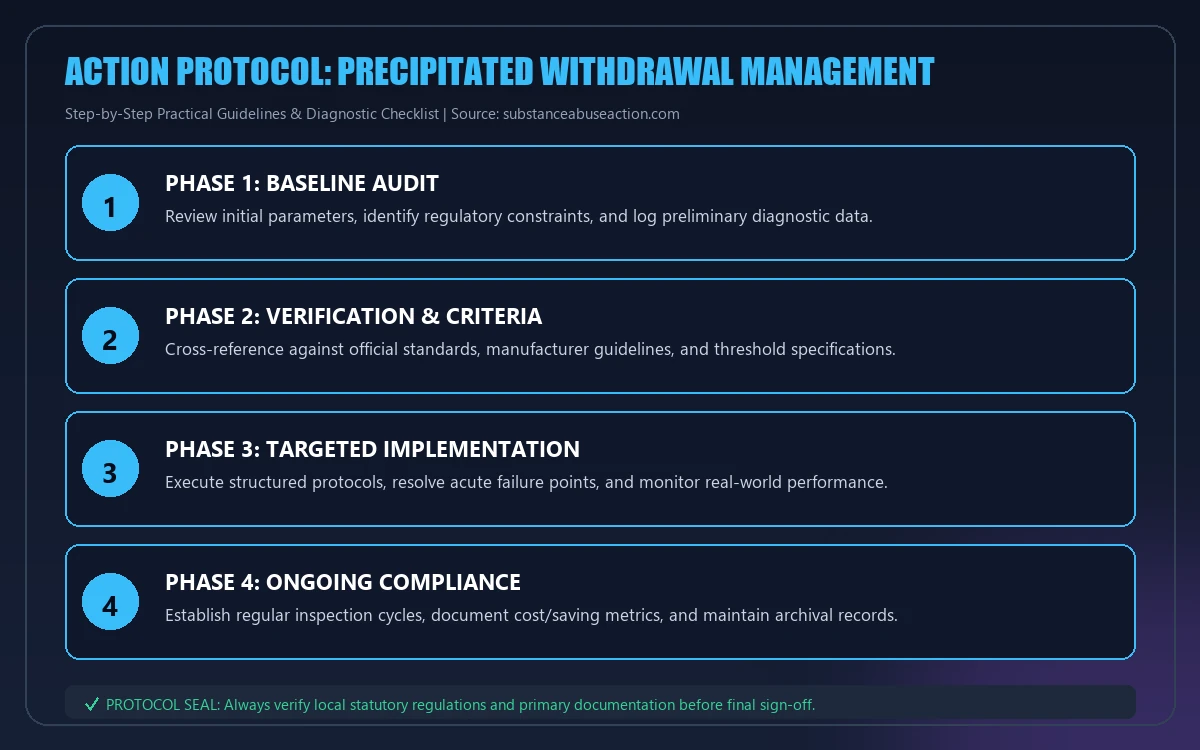
Emergency department high-dose buprenorphine rescue titration proceeds through structured clinical checkpoints:
- Confirm precipitated withdrawal diagnosis objectively: Verify sudden elevation in Clinical Opiate Withdrawal Scale (COWS) score exceeding baseline by six points or reaching absolute score above 13 within two hours of buprenorphine administration.
- Maintain calm clinical environment: Reassure patient verbally, establish peripheral intravenous access, attach continuous cardiac telemetry, and monitor pulse oximetry.
- Administer immediate supplementary buprenorphine: Dispense 8 mg to 16 mg sublingual buprenorphine immediately; avoid swallowing saliva for ten minutes to preserve 30% sublingual bioavailability.
- Deliver concurrent intravenous antiemetics: Administer 4 mg to 8 mg intravenous ondansetron to prevent regurgitation of sublingual medication and suppress serotonin-mediated emetic signaling.
- Reassess COWS score at forty-five minutes: If objective withdrawal markers persist or worsen, administer additional 8 mg sublingual buprenorphine, escalating cumulative dose toward 24 mg to 32 mg ceiling.
- Provide autonomic blunting pharmacotherapy: Deliver alpha-2 adrenergic agonists (clonidine 0.1 mg to 0.2 mg orally or lofexidine 0.54 mg orally) alongside non-steroidal anti-inflammatory agents to blunt residual sympathetic tone.
- Observe patient through stabilization: Maintain observation until COWS score drops below 8 and remains stable for two consecutive hours prior to discharge planning.
Aggressive dosing restores physiological balance. The landmark ED-initiated buprenorphine retention trial evaluated 329 opioid-dependent individuals, demonstrating 78% 30-day treatment engagement in patients initiated directly on buprenorphine compared to 37% in referral-only cohorts. Completing robust buprenorphine withdrawal protocol induction during acute crises preserves longitudinal outpatient retention.
Emergency precipitated withdrawal management hinges on overcoming clinical hesitation. Novice practitioners fear respiratory depression from administering high doses during crises. Pharmacology eliminates this danger: buprenorphine exhibits ceiling effect on respiratory depression due to biased ligand signaling and beta-arrestin recruitment profiles. Adding buprenorphine to buprenorphine-precipitated state poses zero incremental respiratory risk while providing only viable mechanism for rapid symptom termination.
Clinical stability follows receptor saturation. Once cumulative buprenorphine reaches 24 mg to 32 mg, mu receptors achieve near-complete occupancy. Intrinsic signaling plateau satisfies cellular demand. Autonomic hyperarousal subsides, diaphoresis ceases, bowel motility normalizes, and resting heart rate falls below 90 beats per minute. Rapid precipitated withdrawal management converts acute emergency department crisis into stable recovery transition.
Comparative Induction Protocols and Fentanyl Transitions
Selecting induction pathways prevents emergency room crises. Managing fentanyl to suboxone induction requires distinct strategies based on clinical environment, patient stability, and opioid exposure characteristics. High-potency illicit synthetic opioids penetrate lipid membranes rapidly, accumulating in adipose reservoirs and defying traditional cessation timelines. Standard inductions fail when clinicians misjudge clearance rates.
Comparative clinical paradigms offer varied trade-offs across speed, complexity, and adverse event incidence:
| Protocol Parameter | Traditional COWS-Guided Induction | High-Dose Emergency Induction | Microdosing Buprenorphine Bernese Method |
|---|---|---|---|
| Primary Indication | Short-acting prescription opioids, heroin | Emergency department acute withdrawal, active crisis | Outpatient fentanyl use, high tolerance, high anxiety |
| Pre-Induction Abstinence | 12 to 24 hours | 8 to 11–14 hours across dose cohorts (Pratt et al. NEJM 2023) | Zero abstinence required; continue full agonist |
| Threshold COWS Score | Score >= 11 to 12 mandatory | Score >= 8 to 10 acceptable | Baseline score irrelevant (score 0 to 5) |
| Initial Dose | 2 mg to 4 mg sublingual | 8 mg to 16 mg sublingual | 0.5 mg sublingual film |
| Day 1 Cumulative Target | 8 mg to 12 mg | 16 mg to 32 mg | 0.5 mg to 1.0 mg |
| Time to Therapeutic Dose | 24 to 48 hours | 2 hours | 7 to 10 days |
| Precipitated Withdrawal Risk | Moderate to High (fentanyl era) | Low (0.9% in clinical trials) | Minimal (< 1.0% across cohorts) |
| Clinical Resource Demand | Moderate bedside monitoring | High acute nursing intensity | High patient health literacy required |
| Primary Clinical Benefit | Familiar standard protocol | Rapid completion, high retention | Eliminates painful pre-induction abstinence |
Standard protocols generate frequent failures during synthetic opioid transitions. Traditional guidelines require waiting until patient reaches moderate spontaneous withdrawal (COWS >= 11 to 12). In chronic fentanyl exposure, patients often experience intense subjective dysphoria and visceral cravings while objective signs remain low due to lingering adipose stores. Initiating buprenorphine at COWS 12 in these patients frequently triggers catastrophic precipitated withdrawal. Standard precipitated withdrawal management must remain primed whenever attempting traditional transitions from illicit street supplies.
Microdosing buprenorphine bernese methods circumvent receptor shock. Developed in Switzerland, Bernese protocol administers micro-doses of partial agonist while patient maintains habitual full opioid agonist use. Buprenorphine doses start at 0.5 mg once daily, titrating gradually across seven to ten days. Tiny doses bind minute receptor percentages without displacing enough full agonist to trigger noticeable withdrawal symptoms.
Overlapping receptor occupancy builds slowly. Because buprenorphine dissociates very slowly from mu receptors, repeated micro-dosing steadily accumulates binding coverage while displaced full agonists clear through normal metabolic pathways. When buprenorphine reaches therapeutic levels (12 mg to 16 mg daily), clinician discontinues full agonist completely. Patient transitions without experiencing withdrawal symptoms or missing employment obligations.
Microdose precipitated withdrawal management provides safe outpatient alternatives. Outpatients terrified of acute precipitated withdrawal often decline traditional induction. Bernese method eliminates pre-induction abstinence requirement, removing largest behavioral barrier to initiating medication for opioid use disorder. Success depends on precise patient education and blister-packaged tapering schedules.
Hospitalized patients require different tactics. High-dose induction excels in emergency departments and inpatient medical services where acute agitation and rapid departures present imminent risks. Delivering 16 mg to 32 mg up front stabilizes receptor occupancy immediately, terminating acute craving and preventing self-directed discharge. Comparing clinical pathways demonstrates no single technique fits every encounter; personalized matching dictates successful outcomes.
Adjunctive Pharmacotherapy and Autonomic Stabilization
Adjunctive medications provide essential supportive relief during crises. While supplementary buprenorphine addresses underlying receptor deficit, adjunctive agents suppress peripheral autonomic storm and ease visceral distress. Systematic pharmacotherapy targets distinct receptor systems downstream of locus coeruleus hyperactivity.
Alpha-2 adrenergic receptor agonists represent cornerstones of autonomic blunting. Locus coeruleus neurons express inhibitory alpha-2 autoreceptors that reduce norepinephrine release when stimulated. Clonidine administered at 0.1 mg to 0.2 mg orally every four hours suppresses diaphoresis, resting tachycardia, and systemic hypertension. Lofexidine administered at 0.54 mg orally every six hours provides equivalent sympathetic suppression with significantly reduced incidence of orthostatic hypotension and sedation.
Antiemetics protect sublingual drug absorption. Severe emesis expels sublingual medication before mucosal absorption occurs, aborting rescue efforts. Intravenous ondansetron (4 mg to 8 mg) selectively blocks 5-HT3 serotonin receptors in chemoreceptor trigger zones without causing extrapyramidal reactions or excessive sedation. Second-line agents like metoclopramide or prochlorperazine provide alternate pathways if emesis persists, though clinicians must monitor electrocardiograms for QT interval prolongation.
Visceral cramping responds to anticholinergic agents. Precipitated withdrawal accelerates gastrointestinal peristalsis violently, causing watery diarrhea and abdominal cramps. Dicyclomine (20 mg orally every six hours) directly relaxes gastrointestinal smooth muscle through muscarinic receptor blockade. Loperamide administered at conservative doses (2 mg to 4 mg) provides peripheral-only mu receptor stimulation in bowel plexuses, arresting diarrhea without penetrating blood-brain barrier.
Musculoskeletal distress demands non-steroidal analgesics. Intravenous ketorolac (15 mg to 30 mg) provides potent anti-inflammatory analgesia by inhibiting cyclooxygenase enzymes, relieving intense muscular, articular, and lumbar discomfort without adding sedative burden. Topical transdermal heat applications and supplemental oral magnesium oxide further reduce motor restlessness and nocturnal muscle spasms.
Severe autonomic hyperarousal occasionally requires benzodiazepine co-administration. Intravenous lorazepam (1 mg to 2 mg) or oral diazepam (5 mg to 10 mg) enhances central gamma-aminobutyric acid (GABA-A) transmission, suppressing cortical anxiety, shivering, and dangerous muscular tremors. Clinicians must maintain continuous pulse oximetry during benzodiazepine administration because combining central nervous system depressants requires strict vigilance, although buprenorphine ceilings keep respiratory risks low.
Full agonist rescue represents final contingency. Authoritative ASAM opioid use disorder practice guidelines specify that when high-dose buprenorphine titration fails to control refractory precipitated withdrawal, clinicians may administer short-acting full agonists under direct continuous medical supervision. Overcoming buprenorphine binding requires high-potency agents possessing exceptional mass-action capacity.
Intravenous fentanyl administered in titrated boluses (100 mcg to 200 mcg) or hydromorphone (2 mg to 4 mg IV) can compete with buprenorphine at receptor sites during severe treatment-refractory crises. Clinicians must reserve full-agonist rescue for monitored emergency or intensive care settings equipped with mechanical ventilatory support. Once full agonists re-establish baseline stability, clinicians formulate secondary transition strategies utilizing low-dose microdosing induction protocols.
Comprehensive adjunctive precipitated withdrawal management combines targeted molecular interventions:
- Autonomic storm suppression: Lofexidine 0.54 mg orally or clonidine 0.1 mg to 0.2 mg orally every four hours as tolerated by blood pressure.
- Serotonin-mediated nausea control: Ondansetron 4 mg to 8 mg intravenously every eight hours.
- Gastrointestinal spasmolysis: Dicyclomine 20 mg orally every six hours as needed for abdominal cramping.
- Peripheral diarrhea arrest: Loperamide 4 mg initial oral loading dose, followed by 2 mg after each unformed stool (maximum 12 mg daily).
- Musculoskeletal pain mitigation: Ketorolac 15 mg to 30 mg intravenously every six hours (maximum five-day duration).
- Severe motor agitation mitigation: Lorazepam 1 mg intravenously under continuous respiratory and hemodynamic telemetry.
Aggressive supportive care transforms patient experience. Coupling high-dose buprenorphine rescue titration with multi-modal adjunctive pharmacotherapy abbreviates precipitated withdrawal duration from twenty-four hours to under one hundred twenty minutes. Rapid relief restores patient trust and prevents immediate relapse onto illicit street supplies.
Safety Thresholds and Statutory Monitoring Guidelines
Clinical safety mandates structured hemodynamic thresholds. Precipitated withdrawal is physiological crisis characterized by intense cardiovascular strain. Locus coeruleus hyperactivity releases enormous epinephrine and norepinephrine quantities into central and peripheral circulations. Patients exhibiting underlying coronary artery disease, cardiomyopathy, or vascular aneurysms face heightened risks of acute myocardial ischemia or cerebral vascular accidents.
Statutory monitoring guidelines require baseline hemodynamic evaluation before initiating rescue titration. Clinicians must document non-invasive blood pressure, continuous single-lead cardiac telemetry, respiratory rate, core temperature, and pulse oximetry. Reassessment occurs every thirty minutes until objective clinical markers stabilize.
Hemodynamic red flags warrant immediate medical escalation:
- Systolic blood pressure exceeding 180 mmHg or diastolic blood pressure exceeding 110 mmHg.
- Sustained resting heart rate exceeding 130 beats per minute refractory to fluid boluses.
- Cardiac arrhythmias including new-onset atrial fibrillation, ventricular ectopy, or corrected QT interval (QTc) exceeding 500 milliseconds.
- Core body temperature exceeding 38.5 degrees Celsius secondary to severe motor agitation and diaphoresis.
- Mental status alterations including acute delirium, hallucinations, or combativeness inconsistent with standard opioid withdrawal.
Intravenous fluid resuscitation prevents hypovolemic collapse. Profuse emesis, secretory diarrhea, and drenching diaphoresis deplete circulating intravascular volumes rapidly. Dehydration accelerates prerenal azotemia and hemoconcentration. Administering 1,000 mL to 2,000 mL isotonic crystalloids (normal saline or lactated Ringer solution) restores stroke volume, lowers resting heart rate, and maintains renal tubular perfusion during intense adrenergic storms.
Statutory prescribing regulations establish precise parameters. Federal guidelines and state prescription monitoring program mandates govern partial agonist dispensing. Federal statutory changes eliminated former DATA 2000 X-waiver requirements, permitting all DEA-registered practitioners with Schedule III prescribing authority to initiate buprenorphine for opioid use disorder. Removing federal barriers empowers emergency clinicians to administer high-dose buprenorphine protocols without administrative delays.
Clinical documentation must reflect medical necessity. Patient medical records must record serial Clinical Opiate Withdrawal Scale scores, timeline of prior opioid consumption, details of synthetic fentanyl exposure, exact dosing times, objective responses to rescue titrations, and explicit discharge safety plans. Comprehensive documentation protects practitioners and ensures seamless care transitions across outpatient treatment networks.
Special clinical populations require individualized modifications. Pregnant individuals experiencing precipitated withdrawal face risks of hyperadrenergic uterine contractions, placental abruption, and fetal demise. Emergency precipitated withdrawal management during pregnancy requires immediate fetal heart rate monitoring, continuous tocodynamometry, urgent obstetric consultation, and conservative buprenorphine titration paired with intravenous hydration to ensure adequate uteroplacental perfusion.
Patients presenting with co-occurring psychiatric diagnoses experience magnified panic and dissociative symptoms during precipitated withdrawal. Sympathetic hyperarousal mimics severe panic disorder and acute mania. Clinicians must maintain reassuring, low-stimulus environments with dimmed lighting and reduced noise. Calm verbal engagement reduces subjective panic and minimizes requirements for high-dose sedative medications. Rigorous adherence to safety thresholds protects vulnerable patients throughout rescue induction procedures.
Institutional Consensus and Outpatient Treatment Linkage
Modern institutional consensus rejects passive withdrawal observation. Major health systems, academic medical centers, and professional societies have revised clinical pathways to prioritize active emergency department induction and aggressive rescue titration. Leaving patients in unmanaged precipitated withdrawal damages healthcare engagement, drives immediate departure against medical advice, and sharply elevates fatal overdose risks within forty-eight hours of discharge.
Institutional protocols succeed through standardized electronic medical order sets. Hospital systems implementing pre-configured buprenorphine order sets—incorporating automated COWS scoring schedules, reflex high-dose rescue dosing options, intravenous hydration, and bundled adjunctive antiemetics, report significant reductions in protocol variations and hospital transfers. Standardizing emergency department workflows ensures every patient receives rapid, evidence-based interventions regardless of treating clinician specialty.
Outpatient care transitions determine long-term recovery trajectory. Terminating acute precipitated withdrawal represents first step in comprehensive treatment continuum. Discharging patient without immediate, barrier-free access to ongoing buprenorphine maintenance results in rapid relapse. Outpatient navigation teams must coordinate warm handoffs to community clinics, bridge prescriptions covering seven to fourteen days, and schedule rapid follow-up evaluations within seventy-two hours of emergency department discharge.
Peer support specialists optimize linkage outcomes. Integrating certified peer recovery specialists directly into emergency departments during acute induction improves outpatient appointment attendance. Peers provide shared lived experience, demystify buprenorphine maintenance, address transportation and housing obstacles, and support individuals through vulnerable post-induction phases.
Low-barrier outpatient models prevent treatment interruptions. Community clinics must minimize administrative hurdles, eliminating mandatory group counseling attendance or restrictive urine drug screen consequences as prerequisites for ongoing buprenorphine access. Telehealth flexibilities established under federal rules allow virtual clinical encounters for maintenance therapy, preserving continuity for rural and underserved communities.
Evidence proves active intervention saves lives. Opioid use disorder carries staggering morbidity and mortality, driven predominantly by illicit synthetic fentanyl adulteration and erratic supply potencies. Rapid, aggressive precipitated withdrawal management transforms dreaded clinical complications into profound therapeutic opportunities. By saturating displaced receptors with high-dose buprenorphine and providing comprehensive adjunctive relief, clinicians stabilize physiology, alleviate suffering, and establish sustainable foundations for enduring recovery.
Frequently Asked Questions
What defines optimal precipitated withdrawal management during fentanyl transitions?
Optimal management requires rapid administration of supplementary high-dose buprenorphine (8 mg to 16 mg immediate redose, titrating up to 24 mg or 32 mg) alongside intravenous antiemetics and alpha-2 adrenergic agonists. Halting buprenorphine traps patients in severe receptor deficit. Pushing higher doses forces mass-action receptor saturation, restores intracellular signaling, and resolves autonomic hyperactivity rapidly.
Why does microdosing buprenorphine bernese method prevent precipitated withdrawal?
Bernese method introduces minute buprenorphine doses (starting at 0.5 mg) while patient continues habitual full opioid agonist use. Low doses occupy negligible receptor percentages, preventing sudden signaling drops. Because buprenorphine exhibits slow receptor dissociation kinetics, repeated micro-doses gradually build receptor saturation across seven to ten days while full agonists metabolize out, facilitating seamless transitions without requiring pre-induction abstinence.
Can full opioid agonists reverse severe buprenorphine-induced withdrawal?
Short-acting full opioid agonists like intravenous fentanyl (100 mcg to 200 mcg) or hydromorphone (2 mg to 4 mg) can overcome buprenorphine receptor blockade when administered in monitored settings under direct specialist supervision. Guidelines authorize this approach as secondary contingency when high-dose buprenorphine rescue titration fails or proves clinically contraindicated. Continuous respiratory monitoring is mandatory.
How long does untreated precipitated withdrawal last compared to high-dose rescue titration?
Untreated precipitated withdrawal persists between twelve and twenty-eight hours while buprenorphine dissociates slowly and endogenous homeostatic adaptations occur. Implementing high-dose buprenorphine rescue titration (titrating to 24 mg or 32 mg total) combined with targeted adjunctive medications resolves acute autonomic storm within sixty to one hundred twenty minutes, dramatically reducing physiological strain and patient suffering.
References
- Annals of Emergency Medicine / High-Dose Buprenorphine Induction Study (2021). Documented 579 emergency department encounters showing dosing >= 12 mg (up to 32 mg) produced precipitated withdrawal rate of only 0.9%, successfully resolved through rapid supplementary buprenorphine administration without respiratory compromise. URL: https://pubmed.ncbi.nlm.nih.gov/34274154/
- FDA Prescribing Information: Suboxone (Buprenorphine/Naloxone) Sublingual Film (2021). Detailed pharmacological parameters demonstrating sub-nanomolar mu-opioid receptor dissociation constant (Ki = 0.219 nM), partial agonist intrinsic efficacy (alpha < 1.0), 30% sublingual bioavailability, and terminal half-life of 24 to 42 hours. URL: https://www.accessdata.fda.gov/drugsatfda_docs/label/2021/022410s042lbl.pdf
- Addiction / Fentanyl Clearance Study (Huhn et al.) (2020). Demonstrated chronic synthetic fentanyl exhibits prolonged terminal elimination half-life exceeding seven days secondary to extensive lipophilic adipose tissue accumulation, with urinary detection lasting up to nineteen days post-cessation. URL: https://pubmed.ncbi.nlm.nih.gov/32396263/
- Journal of Addiction Medicine / ASAM National Practice Guideline 2020 Focused Update (2020). Established clinical thresholds (COWS >= 11 to 12) for standard initiation and codified management protocols including supplementary buprenorphine titration, supervised full agonist rescue, and alpha-2 adrenergic support. URL: https://pubmed.ncbi.nlm.nih.gov/32404645/
- JAMA / Emergency Department Buprenorphine Clinical Trial (D’Onofrio et al.) (2015). Randomized trial of 329 patients showing ED-initiated buprenorphine produced 78% 30-day treatment retention versus 37% for referral-only protocols, demonstrating critical value of immediate emergency stabilization. URL: https://pubmed.ncbi.nlm.nih.gov/25919902/